
26 October 2010
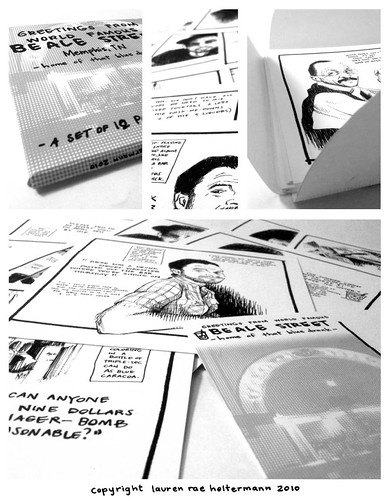
BEALE STREET POSTCARDS
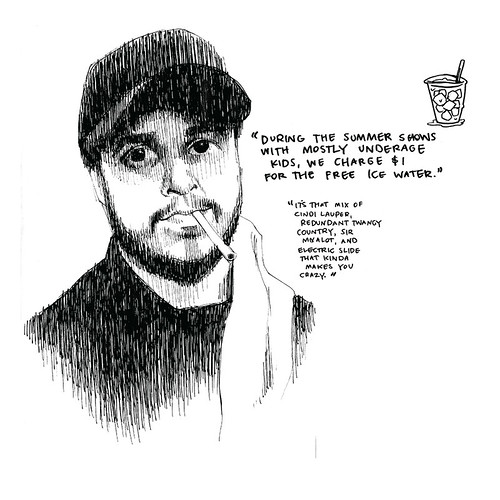
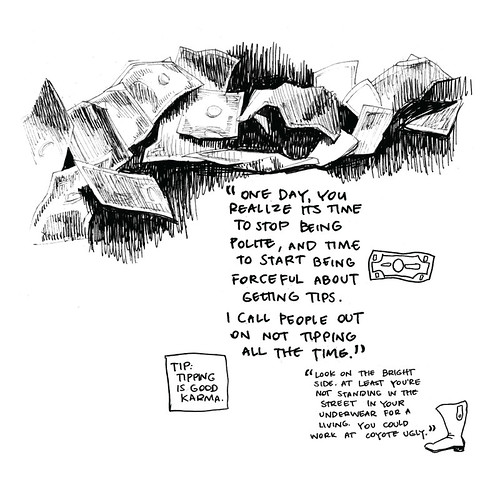
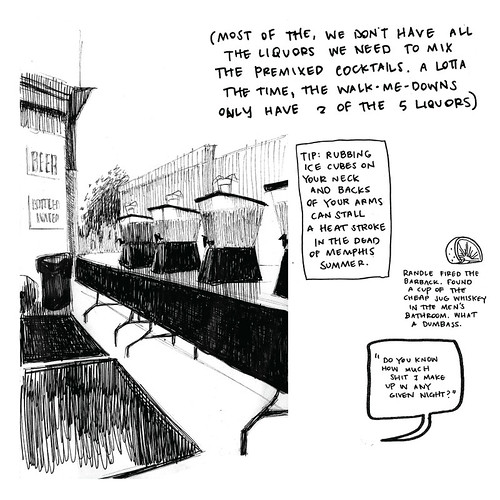
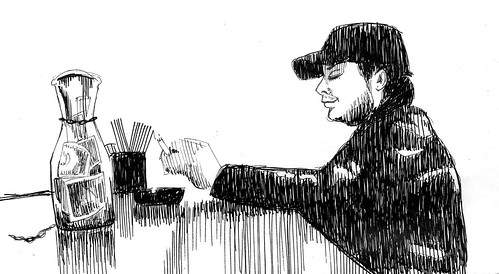
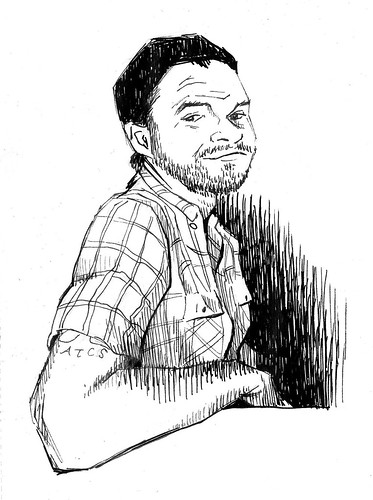
The postcards are finished--12 in all, featuring disgruntled bartenders and jaded street musicians. You can peruse them all in my gallery: Lauren Rae's Carbonmade: Beale Street


22 October 2010
Illustrator Promo
 Frank Floethmann's business card is a really big comic that folds up into business card!

Pierre Paul Pariseau wants you to call him.
 Lou Lou's promo card looks like their illos AND spells her name.
Slack Art's promo extends to the envelope it's mailed in with personalized return address.
 Vicky Newman sends out pinback buttons of her illustrations-- cheaper & classier than t-shirt promo.
05 October 2010

24 September 2010
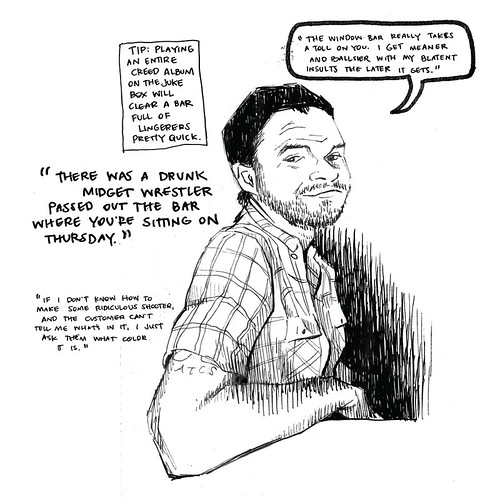
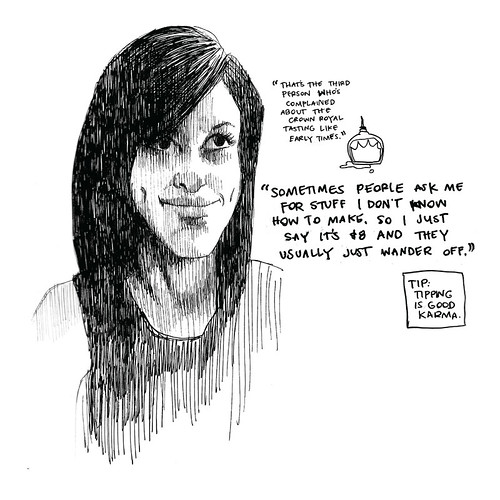
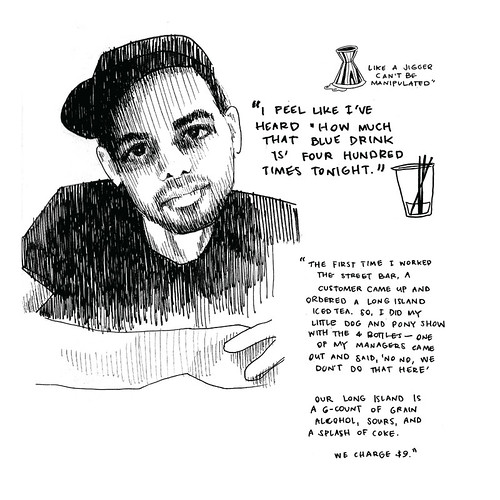
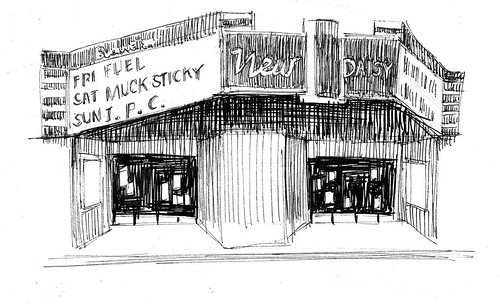
Beale Street Visual Essay Progress
I'm doing a visual essay for Illustration 5 documenting a place I frequent, so I'm documenting Beale Street--specifically the people who are and atmosphere of working there. This is what I've got so far.



16 September 2010
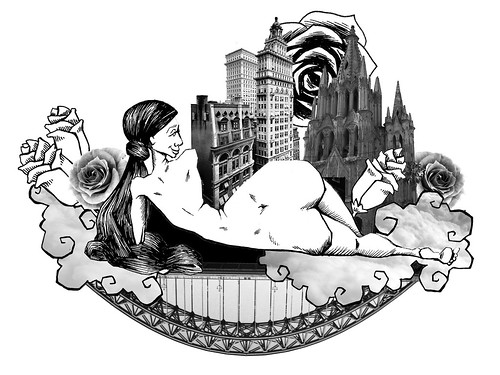
Odalisque
I did this revisioned odalisque for Illustration class last week. I edited it after the critique last week. What'dya think?



15 September 2010
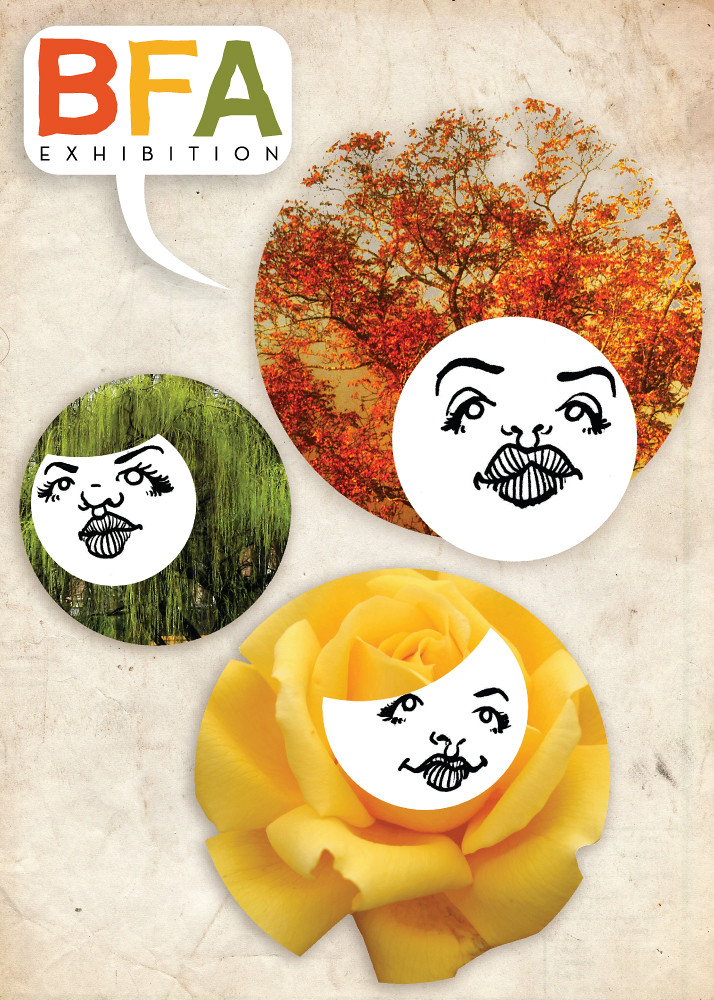
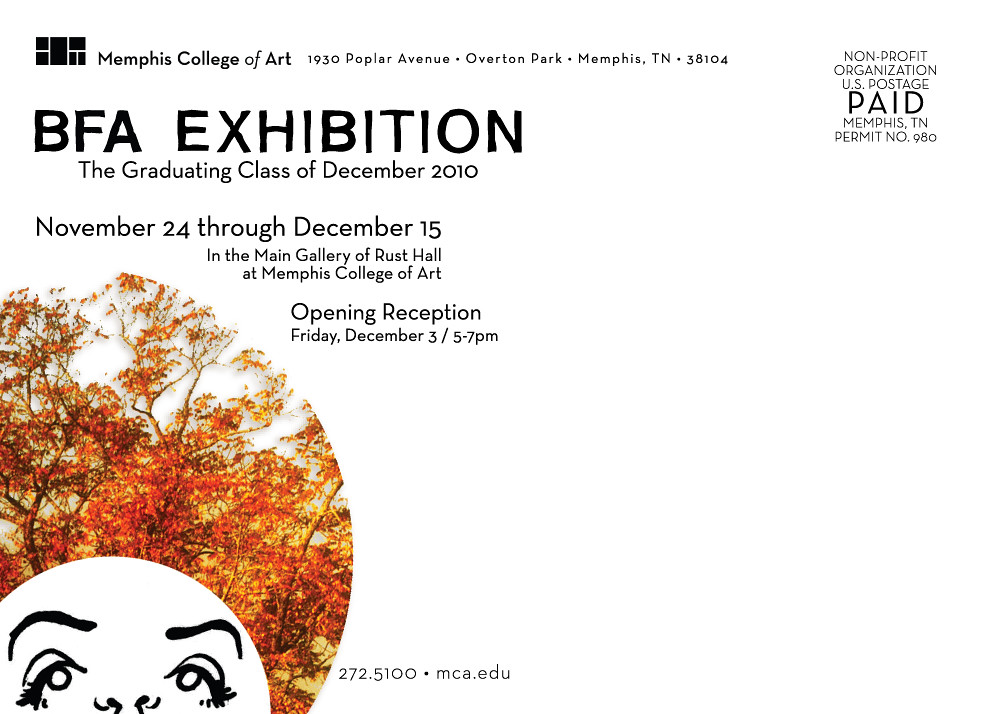
MCA's December 2010 BFA Exhibition Card
This is one my recent assignments at my internship--the BFA Exhibition card for December 2010. A little nerve-racking, as there is always some heated discussions about the show cards among the graduating seniors, but overall, I like it. I hope they do too.


14 September 2010
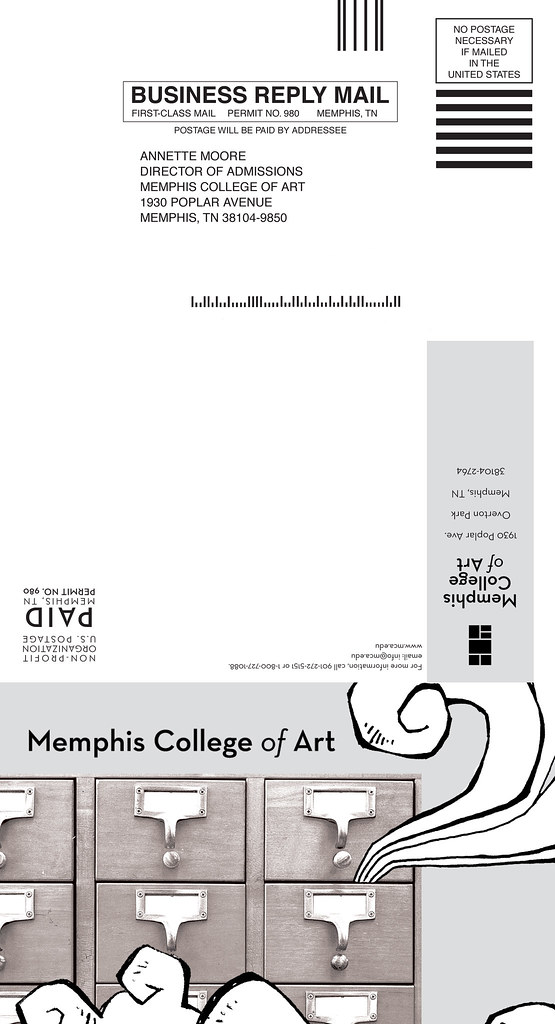
MCA's 2010 Zap Card
So, I recently started an internship with Combustion, a local design firm that handles most of Memphis College of Art's design work. The internship is supposed to be just for Graphic Design students, but being that I'm an Illustration student, I get to draw and design. It's a fun job. My first assignment was to redesign their "zap card;" a mailer they send out to prospective students to keep them on the mailing list.


02 September 2010
State of the Union: Part 06
I don't know what kind of illustrator I am. Maybe I don't understand the question. Or maybe I'm just still experimenting so much that I can't really answer that yet. I'm also not completely sure what kind of career I want to have. I think I'd like to do something that allowed me to illustrate, write, and design--like running a magazine or maybe working for several different publications or businesses doing different stuff.
I think my portfolio is lacking in design, which is the reason I fought to get the internship at Combustion I'm currently doing. I also don't have as much photo/illustration combination work as I'd like to have. I love doing it and I think it looks awesome, but I don't have a camera.
I don't think my portfolio really reflects exactly what I want to do. I think it's starting to more but it's not there yet.
I think my portfolio is lacking in design, which is the reason I fought to get the internship at Combustion I'm currently doing. I also don't have as much photo/illustration combination work as I'd like to have. I love doing it and I think it looks awesome, but I don't have a camera.
I don't think my portfolio really reflects exactly what I want to do. I think it's starting to more but it's not there yet.
01 September 2010
State of the Union: Part 05
If I had to spend the rest of my life illustrating one book, it would be
 The Hitchhiker's Guide to the Galaxy. That's an easy one. It's got some of the most badass descriptions of people, creatures, environments, processes, etc. of any book(s) I've ever read. It would pretty much take my entire life too.
•••
If I was banned from doing art, I'd write. I've always loved writing, and I think I'm pretty good at it. If I end up going to grad school, it will probably be for some form of writing.
•••
If I had one month and one thousand dollars... I would put out a book of articles, interviews, rants, poems, and prose that I've written over the years and illustrate and design it all myself. I try to write a few pages a week, and I've collected plenty of fodder for some kind of publication. It'd probably end up being a kind of somber non-linear tale about early adulthood; moving out the parents house, friends dying, loneliness, naivete, stupid decisions, relationships, forming identity, developing personality, trust, friendship. (That all sounds really depressing, but I think it would end up leaving the reader with a kind of half-and-half happy/sad feeling). If I had my bills paid for a month and had the opportunity to just crank it out, I'd do it all for free and spend the grand on printing costs.
 If I had six months and ten thousand dollars... I would rewrite/edit my ongoing comic story and turn it into a full-length graphic novel. I planned the plot to be spanned out over a hundred or more pages to capture the sense of time that I wanted to be a big part of the story. I feel like it will be effective as it is now (hopefully finished by May 2011). Although I've only worked on it a little over a year, it's one of those stories that has so many influences I've drawn from that it changes with every book I read or class I take. It's something I'd really need six months of uninterrupted time to write it all and draw it all, if not more. I'd ideally want to do the pages at 11x17 or larger and put a lot of work into shading.
If I had a year and one hundred thousand dollars, I'd finally put together the zine I've been yammering about for the past year. Specifically about Memphis life---art, film, culture, food, people, projects, happenings, secrets, drinks, businesses, charity, bars, etc. I'd hire a bunch of local, amateur, talented writers, illustrators, photographers and designers each and pay them for their talents. I'd put out an issue a month with $100,000k, and be able to pick which businesses to advertise for instead of cramming logos of whoever onto the back cover.
The Hitchhiker's Guide to the Galaxy. That's an easy one. It's got some of the most badass descriptions of people, creatures, environments, processes, etc. of any book(s) I've ever read. It would pretty much take my entire life too. If I was banned from doing art, I'd write. I've always loved writing, and I think I'm pretty good at it. If I end up going to grad school, it will probably be for some form of writing.
If I had one month and one thousand dollars... I would put out a book of articles, interviews, rants, poems, and prose that I've written over the years and illustrate and design it all myself. I try to write a few pages a week, and I've collected plenty of fodder for some kind of publication. It'd probably end up being a kind of somber non-linear tale about early adulthood; moving out the parents house, friends dying, loneliness, naivete, stupid decisions, relationships, forming identity, developing personality, trust, friendship. (That all sounds really depressing, but I think it would end up leaving the reader with a kind of half-and-half happy/sad feeling). If I had my bills paid for a month and had the opportunity to just crank it out, I'd do it all for free and spend the grand on printing costs.
If I had six months and ten thousand dollars... I would rewrite/edit my ongoing comic story and turn it into a full-length graphic novel. I planned the plot to be spanned out over a hundred or more pages to capture the sense of time that I wanted to be a big part of the story. I feel like it will be effective as it is now (hopefully finished by May 2011). Although I've only worked on it a little over a year, it's one of those stories that has so many influences I've drawn from that it changes with every book I read or class I take. It's something I'd really need six months of uninterrupted time to write it all and draw it all, if not more. I'd ideally want to do the pages at 11x17 or larger and put a lot of work into shading. If I had a year and one hundred thousand dollars, I'd finally put together the zine I've been yammering about for the past year. Specifically about Memphis life---art, film, culture, food, people, projects, happenings, secrets, drinks, businesses, charity, bars, etc. I'd hire a bunch of local, amateur, talented writers, illustrators, photographers and designers each and pay them for their talents. I'd put out an issue a month with $100,000k, and be able to pick which businesses to advertise for instead of cramming logos of whoever onto the back cover.
31 August 2010
State of the Union: Part 04
one: Sam Flores


Flores works independently, but consistently makes work for a collective of urban artists called 12 Grain and a gallery in California called Fifty24SF.
two: Audrey Kawasaki

Audrey does mostly gallery shows (and does quite well, I may add), but has also been published in NY Arts Magazine, Los Angeles Times, Artillery Magazine, and Juxtapoz.
three: Brandi Milne


I really like Brandi Milne's older work (above) but her new work seems like she's trying to be mainstream, and it's not my thing. She also does mostly gallery work but has been in Hi Fructose a couple of times.
four: Hermann Mejia


Hermann has been one of my favorite illustrators for years. He does work consistently for MAD Magazine. Badass with portraiture and watercolor.
five: McBess

McBess is pretty much doing everything I need to be doing visually. Strong contrast, large hunks of black and white, contrast of empty areas and areas of dense detail, AND awesome exaggerration of human form.
six: Marjane Satrapi

We all know Marjane. Her inking style is a big influence on my ongoing comic. This still is from the movie adaptation of Persepolis but I love the contrast of gritty inkwash texture and stark black & white linework.
seven: Aubrey Beardsley


I love Beardsley's treatment of black & white. Beardsley did a lot of commission work illustrating books and plays. Wish he hadn't died so young!
eight: David Downton

I covered David's process and work in the last post, but he does a lot of work for fashion magazines--Vogue, Harpers Bazaar, ads for Absolut and Tiffany & Co.
nine: Unknown


I found this guy (or girl?)'s work on MonoModa but I don't know who it is. I like the illustrative aspects mixed with the realistic handling of value and form.
ten: Thomas Fuchs


Fuchs has a crazy impressive client list, including Bostom Globe, Chicago Tribune, Field & Stream, Forbes, Fortune, Future, Galmour, GQ, Harper's, Los Angeles Times, Men's Health, Money, National Geographic, National Post, Newsweek, Readers Digest, Rolling Stone, New Yorker, Wall Street Journal, Time, TV Guide, Vibe, etc., etc. I'm so jealous.
eleven: Little Friends of Printmaking


LFOP do a lot of screenprinting and illustration work for bands, music artists, and music shows.
30 August 2010
State of the Union: Part 03
My creative process usually
starts with a lot of thinking. This can easily be construed as procrastination, but don't be fooled. I put the idea in my head and then walk around. Things that I say, or hear, or read, or see influence how the idea grows. I usually hold it in my brain until it feels like I can actually put it into words or images before I ever sketch a thing. Sometimes an innocuous phrase or song or image will trigger something, like it all comes together, in which case I go scrambling for my sketchbook. Then once I have a basic idea, I sketch variations on it, but usually by this point, it's been incubating so long I'm pretty sure where I want to go with it. Sketching is more just for the sake of visual layout and design rather than brainstorming. Eventually I settle on a sketch, and sketch it bigger. I work mostly with ink, so I ink it, scan it, and color it in Photoshop. I tend to add a lot of textures too, and when it calls for it, I'll do texture work in watercolor on a piece of tracing paper over the original drawing and composite it in post.
My process seems to work fairly well. I think spending more time thinking than drawing helps the overall concept of the piece. But at times I wish that the two were more intertwined, as there really isn't ever any record of how I got from Point A to Point B.
•••
 I found this guy David Downton over the summer. He does mostly fashion illustration; models, celebrities, actresses. He's got this ridiculously elegant way of composing a drawing. It's the kind of work that makes me jealous that I can't just sit down with a brush, slap down 7 or 8 perfectly placed lines and splotches of value, and emerge with a gorgeous ten-minute illustration (that I can then sell for the cover of this week's Vogue for a cool grand).
I tracked down an interview with Downton about his process. Turns out, he does dozens of sketches of the same drawing for each illustration, picking a choosing specific marks from each to compile the final result. He actually says, "When the drawing looks right I start to eliminate, to de-construct if you like. I keep working until it looks spontaneous."
I do the same thing, but I have a tendency to add lines where they aren't really necessary. I know it has a lot of to do with the very little visual planning I do for illustrations. I like high contrast and I like minimalism. I'm not huge on fashion art but these are just too gorgeous to get picky with.
His website is DavidDownton.com.
starts with a lot of thinking. This can easily be construed as procrastination, but don't be fooled. I put the idea in my head and then walk around. Things that I say, or hear, or read, or see influence how the idea grows. I usually hold it in my brain until it feels like I can actually put it into words or images before I ever sketch a thing. Sometimes an innocuous phrase or song or image will trigger something, like it all comes together, in which case I go scrambling for my sketchbook. Then once I have a basic idea, I sketch variations on it, but usually by this point, it's been incubating so long I'm pretty sure where I want to go with it. Sketching is more just for the sake of visual layout and design rather than brainstorming. Eventually I settle on a sketch, and sketch it bigger. I work mostly with ink, so I ink it, scan it, and color it in Photoshop. I tend to add a lot of textures too, and when it calls for it, I'll do texture work in watercolor on a piece of tracing paper over the original drawing and composite it in post.
My process seems to work fairly well. I think spending more time thinking than drawing helps the overall concept of the piece. But at times I wish that the two were more intertwined, as there really isn't ever any record of how I got from Point A to Point B.
I found this guy David Downton over the summer. He does mostly fashion illustration; models, celebrities, actresses. He's got this ridiculously elegant way of composing a drawing. It's the kind of work that makes me jealous that I can't just sit down with a brush, slap down 7 or 8 perfectly placed lines and splotches of value, and emerge with a gorgeous ten-minute illustration (that I can then sell for the cover of this week's Vogue for a cool grand). I tracked down an interview with Downton about his process. Turns out, he does dozens of sketches of the same drawing for each illustration, picking a choosing specific marks from each to compile the final result. He actually says, "When the drawing looks right I start to eliminate, to de-construct if you like. I keep working until it looks spontaneous."
I do the same thing, but I have a tendency to add lines where they aren't really necessary. I know it has a lot of to do with the very little visual planning I do for illustrations. I like high contrast and I like minimalism. I'm not huge on fashion art but these are just too gorgeous to get picky with.
His website is DavidDownton.com.
29 August 2010
State of the Union: Part 02

This is my personal favorite piece
that I've made. I spent eight hours a day for a week working on this thing. It means a lot to me for a few different reasons. Firstly, it's the only sculpture I've made that I really liked working on and really liked the finished product. It's also supremely personal.
It's a Tree of Life, a type of Mexican folk art. I saw my first one in person in Ciudad de Mexico two years ago, and this piece was my response for the proceeding exhibition. Trees of Life act as shrines to dead loved ones. I made mine as a self-portrait (with me in the center), and the four skeletons on the branches represent four deaths that have impacted me.
It's also important to me because I built the entire thing in the Rozelle Artists Guild group studio at our original headquarters, 822 Rozelle St. with the help of my best friends. The structure itself was made from disassembling and rebuilding a wooden chandelier found in the warehouse, and the plaster base molded from a found bowl.
 Most people seem to like this print I made in Digital Printmaking last semester, probably because it's dark and creepy. I like it too though.
 I think my tarot card deck surprised me the most. I loved doing them, but I knew that doing 56 individual illustrations--particularly about a subject matter which is both very complicated and of which I knew very little about--was going to be difficult unless I spent most of the time researching the symbolism and condensing it into a simple image, and less of the time on the actual execution. In the final result, the nearly all of the illustrations were drawn at the print size, some even enlarged, which is not typical. They ended up looking simple, but not unfinished. I'm pretty proud of the way they turned out, and I'm still kicking myself for accidentally deleting the original PSDs...
These are five sketches I like as much as any of my finished pieces:


Subscribe to:
Posts (Atom)